
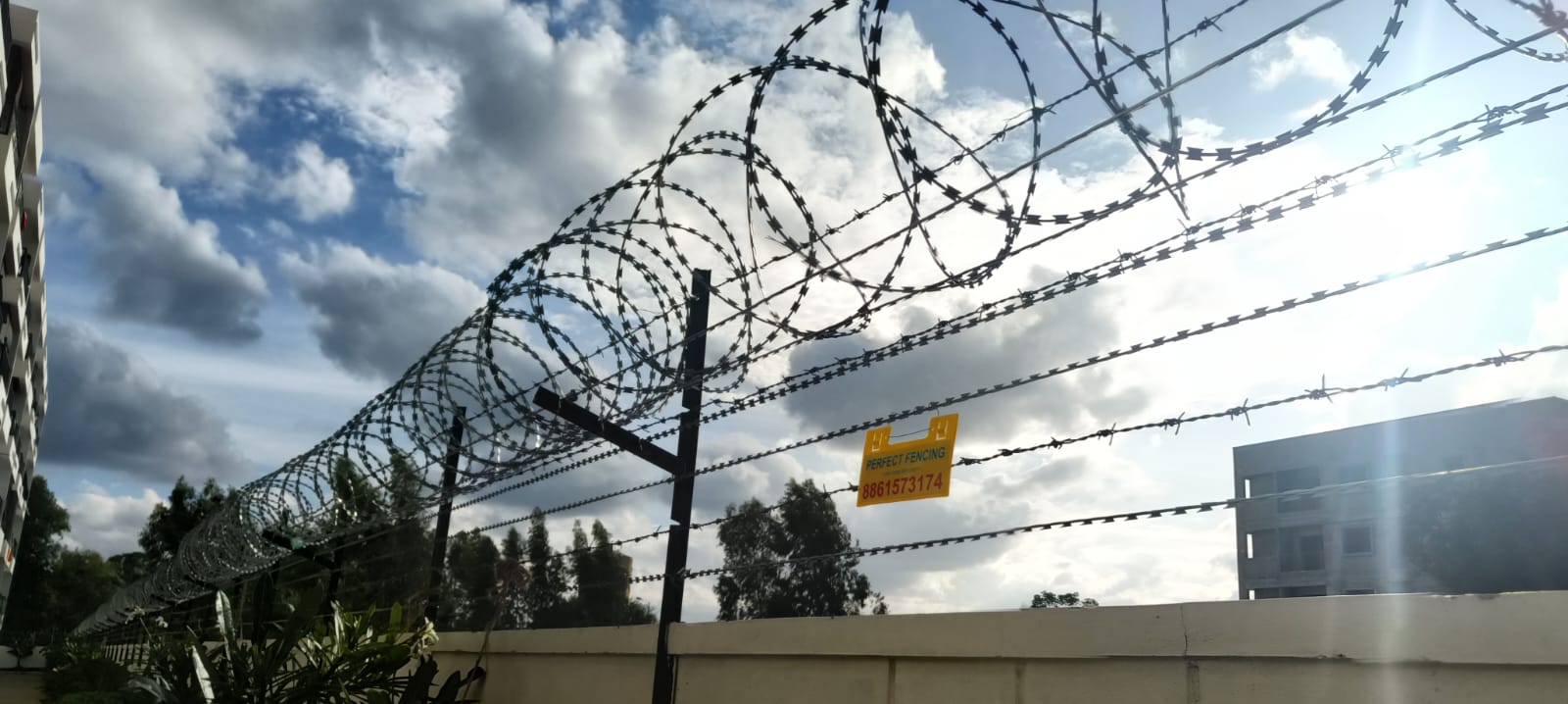
Razor blade with razor concertina coil fencing
Razor blade wire and concertina coil are types of barbed or security wire used primarily for perimeter security, typically on fences, walls, or barriers to deter or prevent unauthorized access. Here’s a breakdown of each:
🔹 Razor Blade Wire
Also known as: Razor wire, barbed tape
Description:
Razor wire consists of sharp-edged or pointed metal strips (blades) designed to inflict serious cuts on anyone attempting to climb through it.
The core is usually a high-tensile steel wire with a galvanized or stainless-steel tape strip that is stamped with sharp barbs and then crimped around the core.
Key Features:
Much more dangerous than traditional barbed wire.
Available in flat, spiral, or crossed configurations.
Blades can vary in length, spacing, and style (short barb, long barb, fish hook, etc.).
Designed to injure, dissuade, or slow down intruders.
Applications:
Military bases
Prisons
Industrial zones
High-security facilities
Border security
🔹 Concertina Coil
Also known as: Concertina razor wire, helical razor wire
Description:
Concertina wire is a type of razor or barbed wire that forms large, coiled loops which expand like a concertina (musical instrument) when deployed.
When stretched out, it forms a cylindrical or spiral barrier that can cover large areas quickly.
Key Features:
Comes in coils with diameters typically ranging from 450mm to 980mm or more.
Often used in combination with barbed wire or chain-link fences.
Can be installed in single coils, double-coil (crossed) patterns, or flat wraps.
Applications:
Rapid deployment for military and riot control
Temporary or permanent barriers
Top of walls or fences
Used with electric fences for enhanced security
⚠️ Safety & Legal Notes
Razor and concertina wire can cause serious injury or death.
Many jurisdictions have laws or restrictions regarding their use, especially in residential or urban areas.
.