
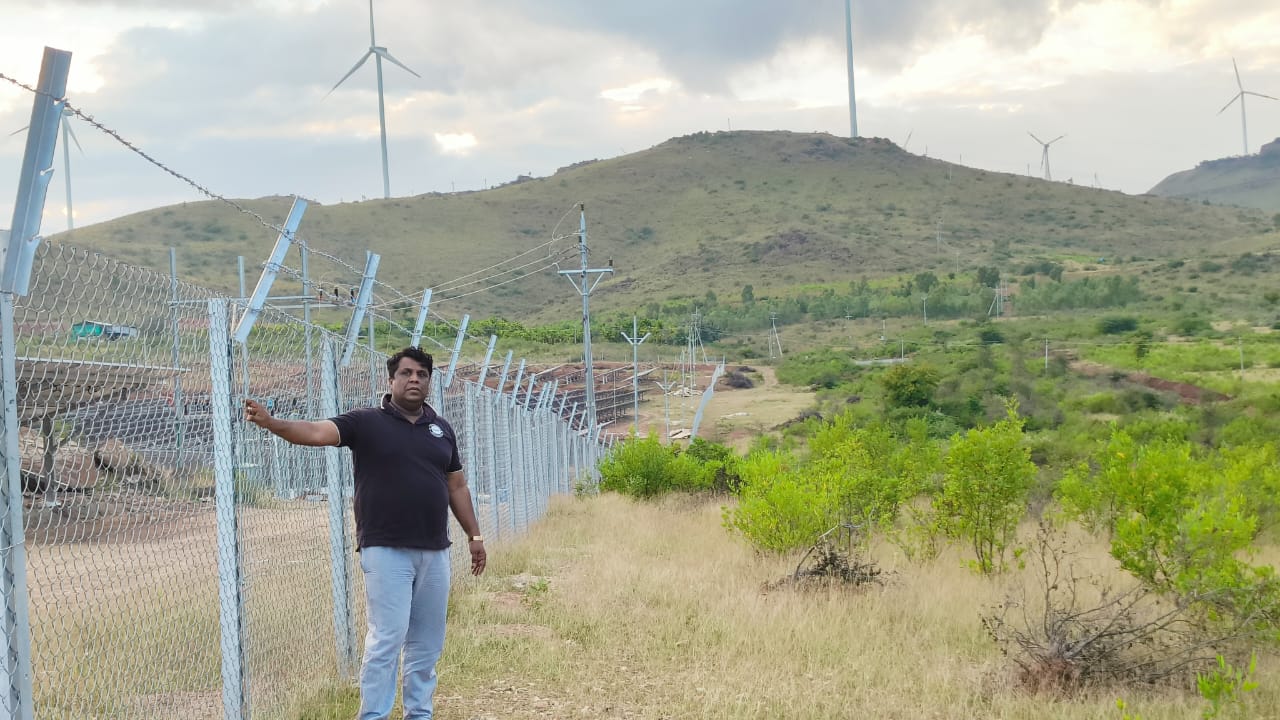
Solar plant fencing with chain link mesh and Barbed wire
Fencing is an essential part of a solar power plant's infrastructure. It provides security, defines the boundary, and helps protect the equipment from unauthorized access, theft, vandalism, and wildlife intrusion. Here's an overview of key considerations and types of fencing used for solar plants:
✅ Purpose of Fencing in a Solar Plant
Security: Prevent theft or damage of solar panels, inverters, cables, and other equipment.
Safety: Prevent unauthorized or accidental entry that could result in injury (high voltage areas).
Wildlife Protection: Keep out animals that may damage wiring or other components.
Boundary Definition: Clearly mark the property and operational limits.
🧱 Common Types of Fencing for Solar Plants
Chain-Link Fencing
Most common and cost-effective.
Easy to install and maintain.
Often used with barbed wire or razor wire on top for added security.
Barbed Wire or Razor Wire Fencing
Usually added on top of chain-link fences.
Provides additional security against intruders.
Welded Mesh Fencing
Stronger and more secure than chain-link.
Difficult to cut or climb.
Aesthetically better for visible areas.
Perimeter Wall with Fencing on Top
Used in high-security or urban locations.
Concrete walls with fencing and barbed wire provide maximum protection.
Electric Fencing (Optional)
May be used in high-risk areas.
Requires regular monitoring and maintenance.
📏 Standard Specifications (May Vary by Region/Client)
Height: Typically 2.1 to 2.5 meters (7–8 feet), plus barbed/razor wire.
Material: Galvanized iron (GI) or PVC-coated wire for corrosion resistance.
Foundation: Concrete footings for posts at intervals (about 2.5–3 m).
Gates: Secure entry points with locks and sometimes surveillance.
📋 Regulatory & Safety Requirements
Comply with local electrical safety codes.
Follow national or state regulations on fencing height and materials (e.g., IS: 2721 or equivalent).